

Star Power
Why 'Noctourism' is becoming a hot, heat-driven travel trend of the year

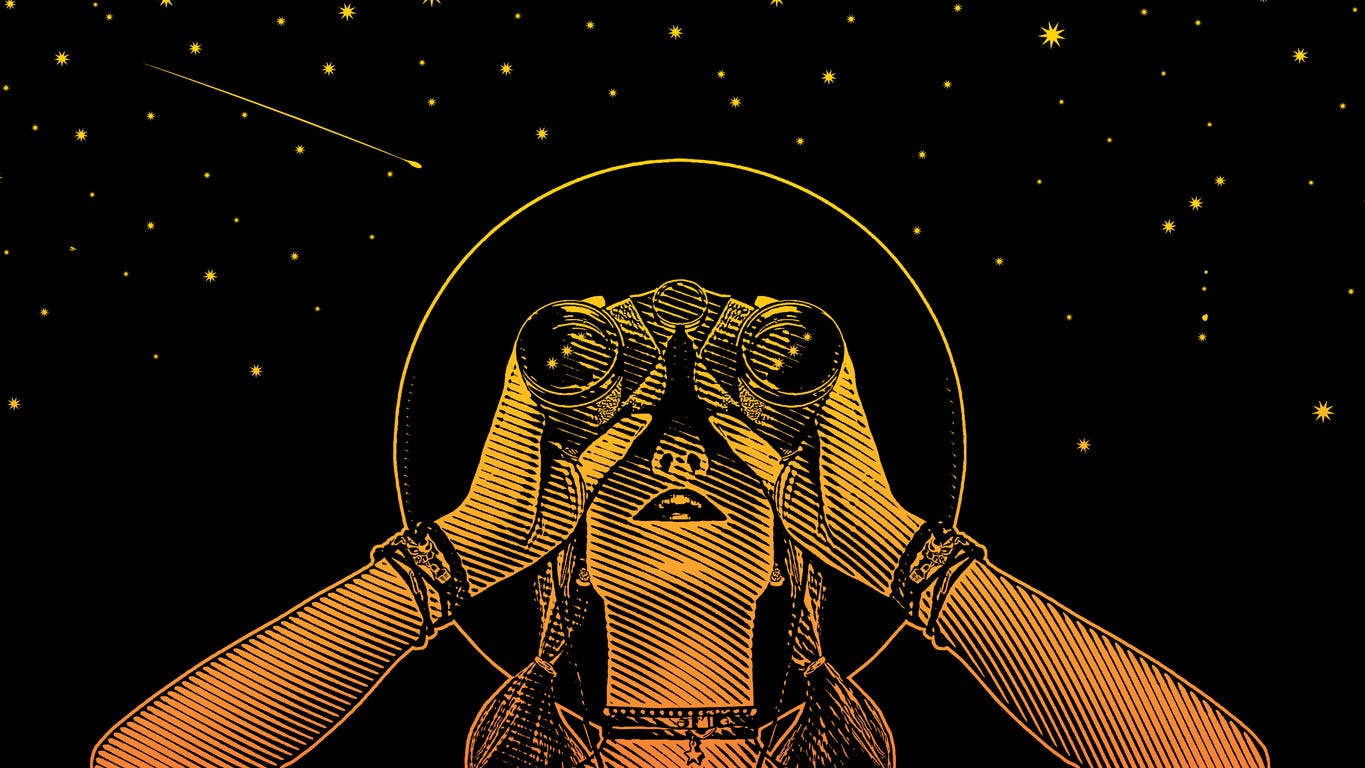
Millions are escaping heat, crowds and chaos by visiting some of the last places on Earth where the sky is dark enough to reveal thousands of stars and offer hours of inspiration
MACKINAW CITY, Michigan —For some of the 847 people who live here, this month’s travel news coming out of Europe has been nearly impossible to believe or even imagine.
In Barcelona, thousands of angry residents, to protest over-tourism, have been shooting high-powered water guns at hundreds of tourists to protest overcrowding. Venice is now charging its record number of visitors stiff entry fees. Officials policing Italy’s Amalfi Coast are banning non-residents from driving most days on the coastal road. And in Japan, local security officers built metal barriers to block a popular view of Mount Fuji, saying the high number of photographers arriving there this summer to get the perfect shot of Fuji’s snow-covered peak are refusing to pick up their litter. Copenhagen, meanwhile, is now offering free food to tourists, but only to those who agree to help clean up after their kids.
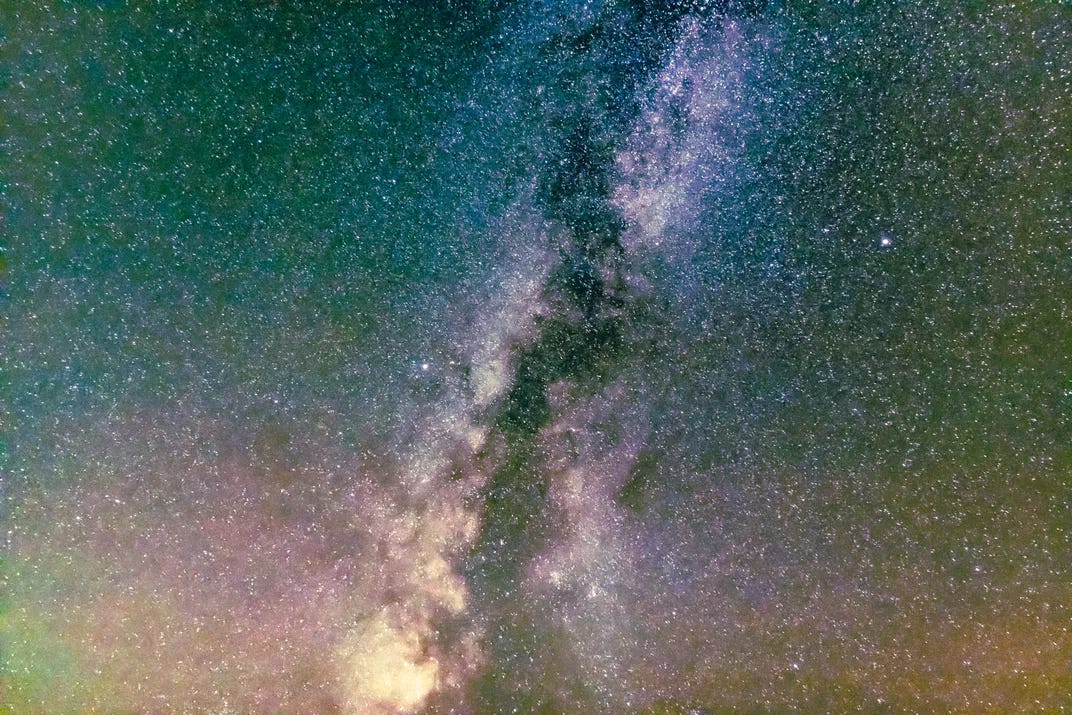
Here, in, Mackinaw City—a small village located on the very tip of the northern-most coast of mainland Michigan— there are no big crowds. Visitors I met said they didn’t come here to buy much or even to create a quick selfie. Many came here to escape the extreme summer heat of places further south—and also to experience something very rare and unimaginable: one of the best naked-eye views of the Milky Way in the world.
Mackinaw City has a Dark Sky Park—one of the 203 such parks now operating internationally to protect public access to the world’s decreasing number of completely dark skies unspoiled by artificial light. Here, there are no street lamps, no neon, no office buildings nor many house lights that could diminish anyone’s pure view of the night sky. Officials prohibit most uses of artificial lights after dark, giving residents and visitors, alike, small infrared lights to make their way to the beach for star-gazing. “We’re nearly a hundred miles from any city,” says Amanda Hubbard, an area resident hosting me here. “It’s why there is very little light pollution, which makes it possible to get a 360-degree, 3-D view of thousands of stars and the universe we’re a part of.”
An inspiring sight? Yes, but that hardly covers it. For a growing number of tourism industry officials and climate scientists, the dark skies also now offer a clear vision of the future.
Noctourism
Tourism officials now call dark sky tourism “noctourism”— a portmanteau of “nocturnal” and “tourism.” They have begun increasing their focus on developing after-dark events, cultural activities and dark sky viewings—in part, to build climate-change resilience into the industry’s peak tourism season, increasingly challenged by rising heat and forecast to get hotter.
Also driving the trend is rising public fascination in astronomy, chiefly in new opportunities to witness rare celestial events like eclipses and meteor showers. Tours now available to view the Northern Lights over Nuuk, Greenland or to go truffle hunting at night in Piedmont, Italy or to do some “Aurora hunting” from a hot spring in Iceland are becoming especially popular.
According to a recent survey of 27,000 travelers by the Dutch travel company, booking.com, one of the world’s leading digital travel companies, 62% said they “plan to ditch the daylight crowds for midnight magic” this year and next, with 72% saying they want to visit a dark sky destination offering experiences to help visitors both learn about “and contemplate the vastness of the universe and our place in it.” Another 57% said they want star guides to help families identify different constellations and learn how to track them over time. And 59% also said they want to visit dark sky parks to provide “a cooler, and less crowded experience” that will also focus on opportunities to mix star-gazing with meditation and wellness exercises and “help people learn new ways to create calm.” Nearly all respondents said they want to see celestial events.
Old to New
After dark tourism isn’t new. It’s just not always been taken with the help of a tour guide. One such independent all-nighter, in particular, remains etched in my memory—the time many years ago when I and the late New York Times journalist Joel Brinkley, and several other friends working at NPR at the time, organized our own trip from Washington, D.C., to Hawaii’s dark sky observatory, located above the clouds at 10,000 feet in Maui, near the Haleakala Crater, to catch a glimpse of Halley’s Comet, the famous periodic comet that orbits the Sun approximately every 76 years. Back then, there were no formal tours of such events. Today, their draw is more widely understood. The world looks, feels and sounds different under the cover of darkness, and as experienced here, too—this summer in Mackinaw— peering at the night sky with friends and people from all over the world can add both a sense of eerie mystery and instant camaraderie.
Bill Wren, a special assistant at the McDonald Observatory in West Texas, a Dark Sky Park, says Mackinaw City’s Headlands Observatory, along with the Grand Canyon’s dark sky parks in Arizona, offer people access to the darkest natural skies in North America. “More people want to see the night sky now because light pollution is increasing,” Wren says. “Places in America where you can go to see a naturally brightly starry sky are vanishing.”
“We see people all the time at our public dark sky parties who have never seen the Milky Way, and they’re just awe-inspired when they do.” — Bill Wren, the McDonald Observatory, West Texas
Next Steps: “The Sky’s the Limit”
Here in Mackinaw and across the country, new talks have begun among tourism leaders to expand today’s dark sky parks into larger and more complex eco-tourism hubs and regional centers for advanced environmental research—to help track how our changing climate will be evolving over time.
Some dark sky parks have already begun to move ahead on this, with some creating strategic tourism partnerships with some of the country’s universities, national parks, travel companies and wellness centers.
The City of Tucson, for example, has already introduced its Astro Trail, a network of 11 sky-watching spots which include access to a 32-inch public telescope at Mount Lemmon Sky Center and Saguaro National Park, one of the first places to win Dark Sky certification in 2023. (Certification recognizes and protects areas with exceptional starry nights and minimal light pollution.)
This fall, Phoenix will welcome a first-of-its-kind International Dark Sky Discovery Center, a 23,000-square-foot astronomy hub being built in Fountain Hills, with an observatory, a deep space imaging camera, a planetarium and immersive exhibits for kids.
Canada, meanwhile, is continuing to draw growing numbers to the country’s Yukon Territory, which borders Alaska and which has seen a spike in aurora-season visits, with local outfitters developing out-of-the-box ways to enjoy the phenomenon. North Country Outdoor Adventures, for example, is running Northern Light Tours and nighttime ice-fishing tours near the small, low-light city of Whitehorse to combine angling with night-sky viewing, while the new Yukon Spa in Dawson City has installed a rooftop barrel sauna and whirlpool which guests can use while star-gazing.
Interest in eclipse tourism is also ramping up, with solar eclipse spectacles visible in Spain in 2026 and in Egypt in 2027, with some trips already sold out. Many small-town wellness centers and big-city resorts are also adding astronomy-meets-wellness experiences, such as full-moon sound baths and starlit meditations.
“More people today are discovering that there’s definitely a sense of awe to stand and look up and see the stars slashed across the sky—and realize the three-dimensional depth that you can see when you look into the plane of the galaxy,” Wren says. “The size and scale of it all provides one with a sense of context, perspective, and reminds us that we’re all a part of something bigger.
“There’s a chill that goes up the spine when people realize why the dark now is just as important to our lives as the light.”
Have a favorite stargazing site to recommend? Please mention it here, and thank you, as always, for sharing your light with our growing community!
NOTE: This piece was updated on July 30th and 31st to add additional details on the expanding role of dark sky parks as climate-driven antidotes to the rise of extreme weather, now and next.