

Yes, Robochef!
Automation is showing up in restaurants to help solve some of our labor woes

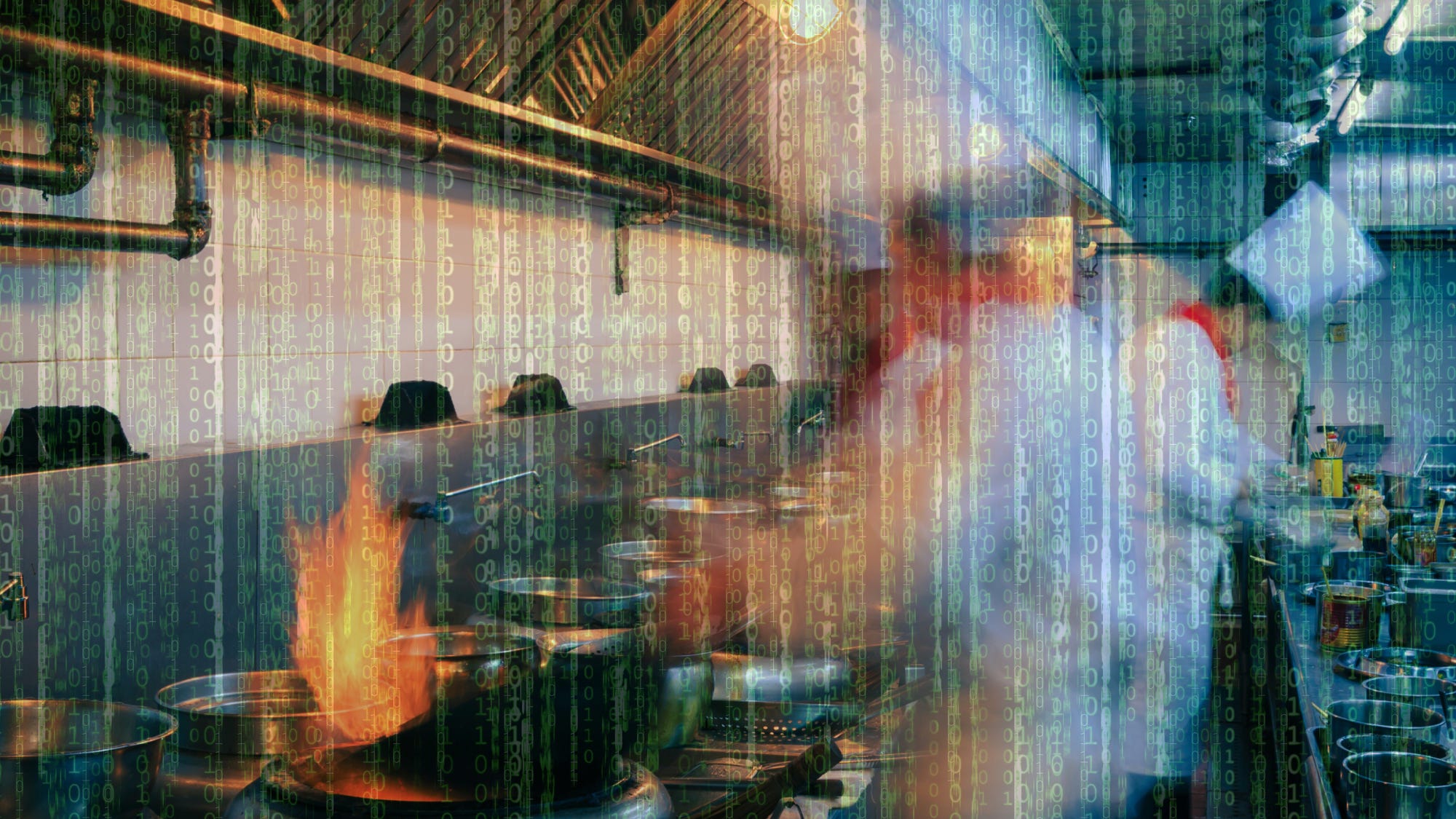
As Italy and most of the world face a demographic crisis with declining birth rates and labor shortages, restaurants like Florence’s Mangiafoco Osteria Tartuferia are turning to automation out of necessity rather than novelty. The rise of robots and AI in hospitality is reshaping the industry worldwide, balancing efficiency with tradition as businesses grapple with higher costs and fewer workers.
WASHINGTON—On a quiet cobblestone street in Florence, just steps from the Ponte Vecchio on the Borgo Santi Apostoli, sits Mangiafoco Osteria Tartuferia, a cozy restaurant specializing in traditional Tuscan cuisine, with many dishes utilizing the coveted black truffle, a delicacy of the region.
Here, you are welcomed as family, and the cuisine is always pitch-perfect. So, it came as a surprise when I complimented the waiter on the meal, and he told me that the in-house robot, Bimby, a kitchen device that’s been on the market for the past decade, helped make the sauce that dressed my pasta.
For Mangiafoco Osteria Tartuferia, like many restaurants in Italy and around the world, automation isn’t a novelty anymore—it’s a necessity. Shifting demographics have triggered labor shortages and rising costs, forcing the hospitality industry to confront a stark reality: the old ways of doing business are no longer sustainable. But as Italy, a country known for its rich culinary heritage, begins to embrace robots, a pressing question emerges: Can innovation coexist with tradition? We’re about to find out.
Decoding the Demographics
It’s no secret that most of the developed world is experiencing a demographic upheaval unlike any we’ve seen since the end of the Second World War. However, rather than growing exponentially, as we did then, national populations in many of the world’s countries have entered a period of precipitous decline, driven primarily by low birth rates.
Take Italy, for example. This country’s population peaked at 60.79 million in 2017 and has declined since then. It hasn’t grown naturally, meaning solely through births and without immigration since 1993. As we reported earlier this year, it is on track to lose a million people, roughly the population of Naples, by the end of this decade.
No children left behind

Rural Italy is grappling with a demographic crisis as declining birth rates and youth migration leave small towns with aging populations and shrinking communities. Efforts to revitalize these areas, such as offering "one euro" homes and financial incentives, have met with mixed success, while luxury brands repurposing aban…
This demographic reality has also crept up in other nations across Europe, Asia, and the Americas. For example, the birth rate dropped below 2.1 in the United States in 2007 and hasn't recovered since. Immigration is now essential for U.S. population growth. However, given the hostile attitude towards immigrants today, it’s anyone’s guess how long that pipeline will sustain the labor market. Despite their relatively ample supply, there is also some resistance to hiring older workers.
When fewer workers are available, labor costs rise, and recruiting and retaining workers becomes more challenging. Robots, automation, and, to some degree, artificial intelligence are being leveraged to fill the gap, improving efficiencies across the restaurant industry, from mom-and-pop businesses to multinational chains.
The Curious Creep of Automation
Based on the media diet we've fed over a lifetime, it’s easy to imagine how robots should look and act in our daily lives. In most cases, they’re humanoid, resembling some version of Rosey the Robot from The Jetsons. Soupy Dumplings, a relatively new Asian restaurant in Washington, D.C.’s Logan Circle neighborhood, uses one like this, called Bella, which helps servers deliver food from the kitchen to hungry customers in the dining room.
Robots with human attributes like Bella are typically part of the customer experience in places like Las Vegas, where automated bartenders and baristas, like ADAM from Richtech Robotics, make everything from cocktails to coffee to boba tea for private events. One bar in this city, Tipsy Robot, which has Planet Hollywood and The Venetian locations, exclusively uses robotic mixologists. These machines can produce up to 120 drinks per hour, and cocktails only take 60 to 90 seconds to make. However, using humanoid robots like these in most bars and restaurants is limited, for now, while automation is not.
According to one estimate, at least three-quarters of restaurants use automation in three or more areas of their operations, known as “hospitality tech.” This includes front-of-house and back-of-house operations—helping everything from hosts, baristas, and drive-through operators to inventory management, food preparation, and order capacity monitoring. So if you’ve ever booked a restaurant reservation on OpenTable or Resy, ordered from your mobile at Starbucks or McDonald’s, paid a bill through Stripe or Toast, or placed a takeout order through GrubHub or DoorDash, you’ve played a role in the automation of the restaurant industry.
It’s More than Survival, It’s the Future
The adoption of automation throughout restaurant operations has increased as business owners look to enhance efficiency and address rising labor prices due to worker shortages.
While precise data on the percentage of restaurants employing robots is limited, several major chains have begun integrating, or at least testing, robotic solutions. For example, Chipotle has tested robots like "Chippy" for making tortilla chips and "Autocado" for handling avocados and making guacamole. Sweetgreen is implementing its "Infinite Kitchen" automated system to prepare salads. Chic-fil-a uses an army of robots to make their lemonade. White Castle, the Midwest hamburger chain, uses “Flippy” to make French fries and other fried items. And Tigawok, the first-ever robot-powered Chinese restaurant in the U.S., uses “BOTINKIT,” a robotic wok, to dish out traditional recipes.
The adoption of automation is expected to grow in the coming years as more restauranteurs begin realizing the benefits of cost management, not just in labor but also in portion control and ordering. Machines can handle more orders in an hour than people, which can translate to more sales. Proponents argue that they also make fewer mistakes and tend to pay for themselves within one to two years. However, that’s not always the case.
“A restaurant that uses Flippy 12 hours a day is paying $14.51 an hour, slightly more than the median wage for fast food cooks, which is $14.31, according to the Bureau of Labor Statistics,” notes Aneurin Canham-Clyne for Restaurant Dive. “The hourly cost of operation falls to $7.25 — the federal minimum wage — for a restaurant that uses the robot 24 hours a day.” So, restaurants must balance the costs, which can be high upfront, against the long-term projected utilization.
Restauranteurs generally argue that automation allows them to remove workers from mundane or high-risk tasks, like booking tables or making French fries. This allows workers to focus more on the customer experience in other parts of the business. So, while automation will become more common in restaurants in the coming years, and certainly more so in high-volume fast-casual or fast-food concepts, it is far more likely to be hidden in places where the customer doesn’t notice or care.
Ultimately, the dining experience is very human and personal, so too much automation could prove problematic. CAVA CEO Andrew Rebhun, who leverages automation throughout his restaurants, notes, “We’re going to continue to invest in our team members, equipping them with tools and training to make sure that they deliver those strong, positive, consistent, memorable experiences to allow them to run great restaurants.”